
The Vision Collective
Why Optomap Imaging is a Smart Choice for your Eye Health
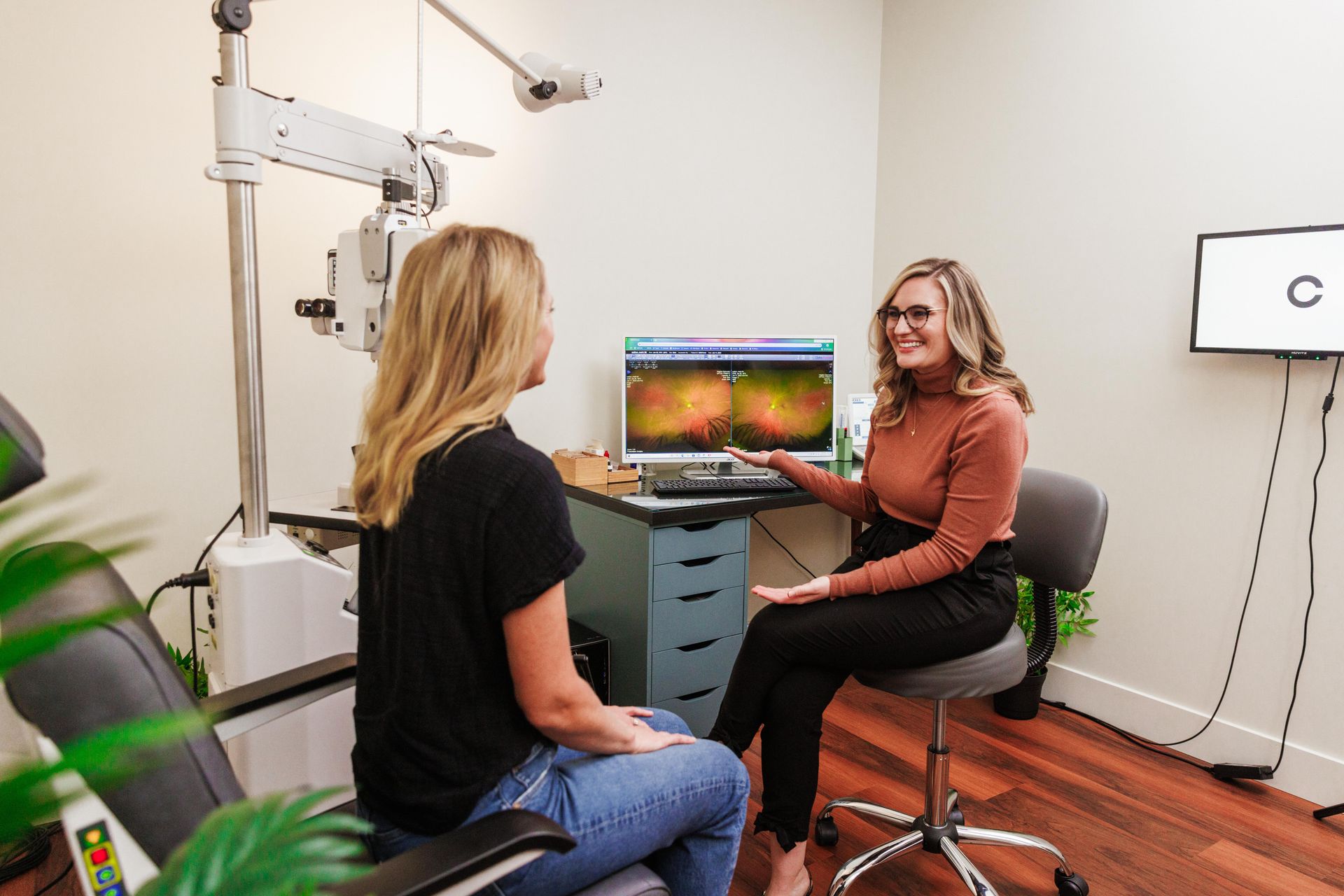
When you get your eyes checked, there’s a lot going on behind the scenes — especially with the retina, the part of your eye that captures light and sends signals to your brain so you can see.
In the past, doctors often needed to use eye-drop dilation and special lights to look at your retina carefully. Today, though, there’s a better way: Optomap — a quick, painless scan that takes a wide-angle picture of the back of your eye.
Here’s what Optomap does for you — and why many people think the extra cost is worth it.
✅ What Optomap Does for You (Not Just the Doctor)
- Gives a big view of your retina (80%–more in one scan). Optomap’s “ultra-widefield” scan captures around 200°, meaning over 80% of your retina in a single image — far more than older methods.
- Catches problems early — often before you notice symptoms. Because Optomap shows so much more of your retina, it helps detect early changes or problems: things like retinal tears, signs of diabetic eye disease, macular degeneration, or blood-vessel issues.
- Fast, easy, and comfortable. The scan takes less than a second per eye, uses gentle light instead of drops, and nothing touches your eye. Many people appreciate not having to deal with blurry vision or light sensitivity afterward.
- Keeps a digital record over time. Because the images are stored, future scans can be compared to past ones. That’s really helpful if your eye health changes slowly — you catch subtle shifts before they become serious.
💡 Why Spending Money on Optomap Is Often Worth It
- Peace of mind. Even if your eyes feel fine, serious retinal problems can begin without symptoms. Having a wide, detailed scan gives you better protection — for a price that many consider small compared to what could go wrong.
- Better screening than old-fashioned photos or checkups. Traditional retinal exams or older fundus photos may miss things in the corners or periphery. Optomap covers much more in one go, giving a more complete look at your retina.
- Less hassle — and no recovery time. Unlike dilation drops (which blur vision for hours and make light painful), Optomap lets you get back to your day immediately. No extra sunglasses, no waiting, no blurry drive home.
📝 What to Know (and When Dilation Might Still Be Needed)
- Optomap gives a very wide view — but it does not show absolutely everything. Some eye doctors still recommend dilation in certain situations, especially if there are symptoms or risk factors like a high prescription, diabetes, or family history of eye disease.
- Because it’s often considered “extra screening,” many insurance plans don’t cover it, but give a discount instead. Usually this type of technology costs $85 per image but with insurance it is usually $39 or even less. Many patients agree the extra cost is worth the improved safety and comfort.
📢 Bottom Line
If you care about your vision — and want an easier, more comfortable way to protect it — Optomap is a smart investment. It gives you a wide, detailed view of your retina, catches hidden problems early, and creates a permanent record that helps track changes over time.